


Industrial Wire Drawing Machines: Technical Engineering & Procurement Guide
In heavy wire processing and metal forming operations, industrial wire drawing machines serve as primary capital equipment. The fundamental mechanism involves pulling metallic wire rods—typically low-carbon steel, high-carbon steel, stainless steel, or alloy wire—through a series of converging tungsten carbide or polycrystalline diamond (PCD) dies. This progressive reduction in cross-sectional area induces plastic deformation, increasing tensile strength while achieving precise dimensional tolerances and smooth surface finishes.
Selecting the appropriate wire drawing system requires balancing mechanical reduction ratios, thermal dissipation capacity, and line speed synchronization. Industrial-grade configurations operate under continuous mechanical stress, demanding robust structural foundations, precise gear transmissions, and stable cooling circuits to prevent thermal degradation of the drawn wire and mechanical fatigue in drive components.

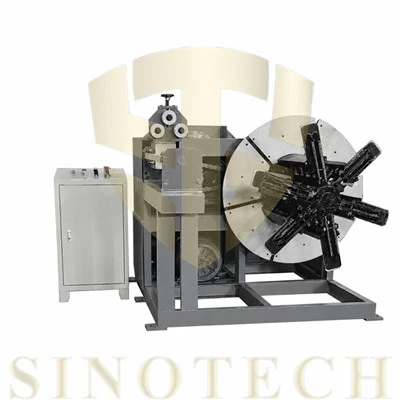
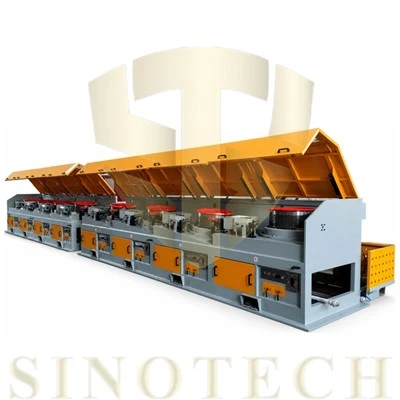

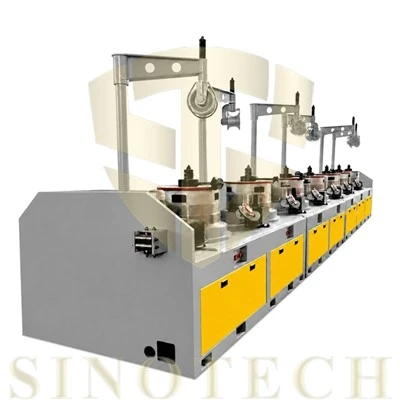
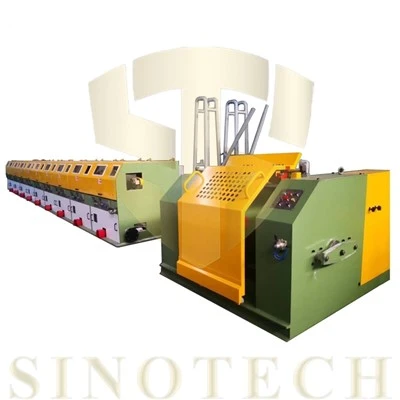
Machine Types
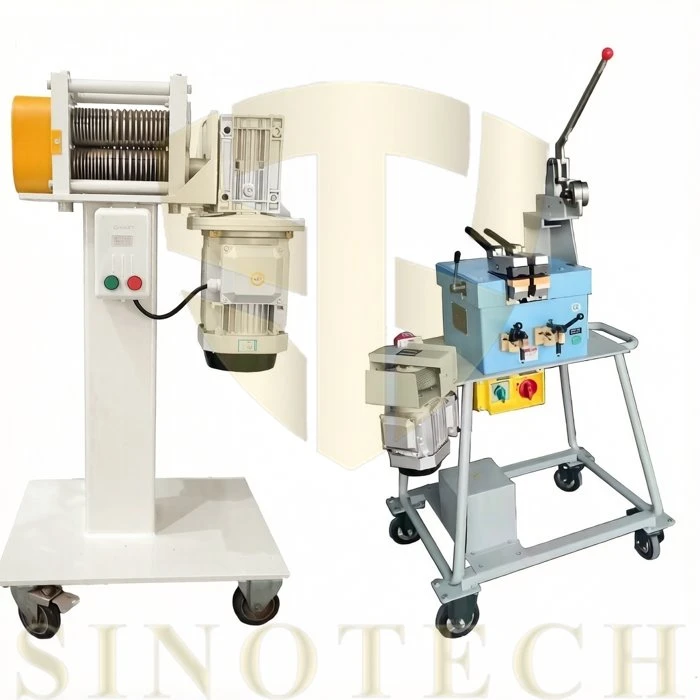
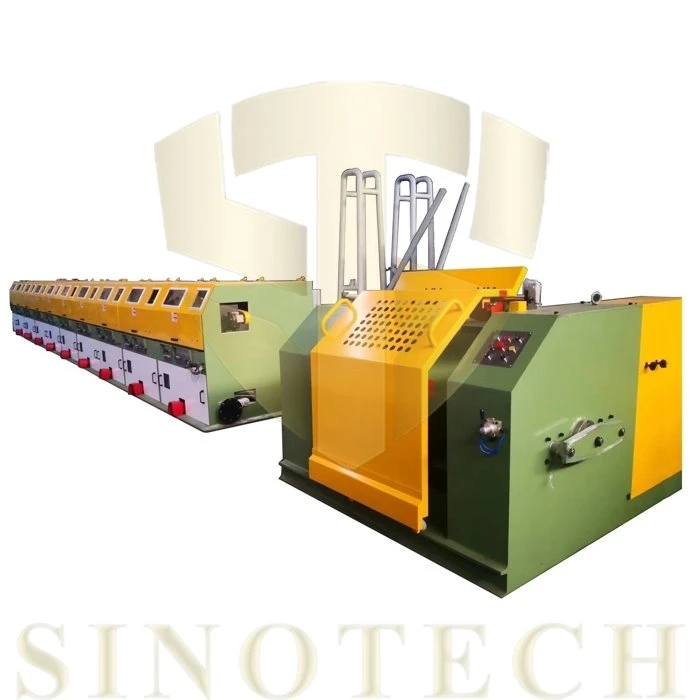
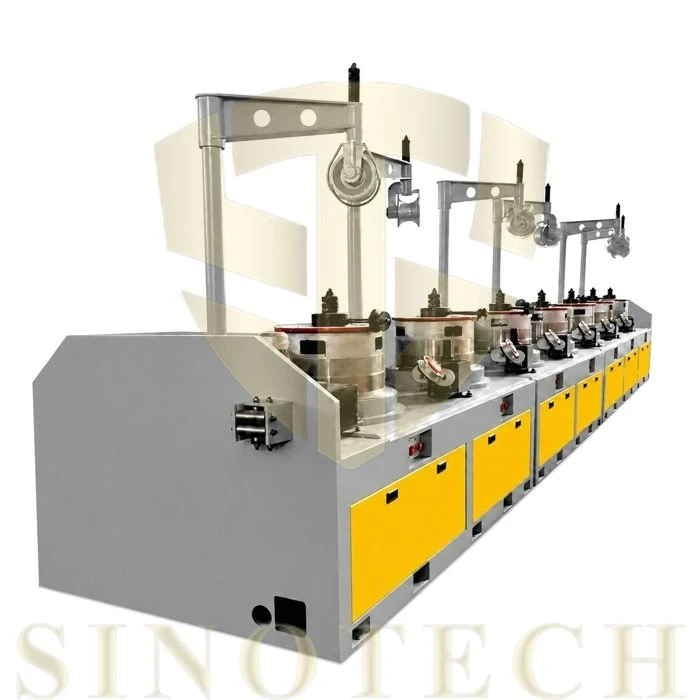

Different metallurgical inputs and downstream forming requirements dictate specific machine architectures. Understanding structural variations prevents operational mismatches during plant layout planning.
Straight-Line Wire Drawing Machines
- Architecture: Multiple independent capstans aligned in a linear configuration, each driven by an individual AC vector motor controlled via closed-loop feedback systems.
- Application Focus: High-speed continuous reduction of medium-to-high carbon steel wire, alloy steel wire, and stainless steel wire.
- Engineering Advantage: Eliminates wire torsion and twist during the drawing process. Micro-dancer arm tension control maintains constant back-tension across each die, ensuring tight diameter tolerances even during rapid acceleration and deceleration phases.
Pulley-Type (Cones-Type) Wire Drawing Machines
- Architecture: A series of stepped capstans mounted on a common shaft or driven through a shared gearbox, utilizing cumulative slip between the wire loops and capstan surface.
- Application Focus: Production of low-carbon steel wire, galvanized wire, and welding wire where absolute torsion-free drawing is less critical.
- Engineering Advantage: Compact floor footprint and lower initial capital investment. Suitable for high-reduction ratios over shorter production lines.
Water Tank (Wet) Wire Drawing Machines
- Architecture: Both capstans and drawing dies are fully immersed in an emulsion lubricant bath inside a sealed stainless steel tank.
- Application Focus: Fine and superfine wire drawing, including copper, brass, stainless steel, and carbon steel fine wires (down to 0.05mm).
- Engineering Advantage: Direct cooling at the point of deformation removes frictional heat efficiently, preventing wire annealing or oxidation at high drawing speeds.
Inverted Vertical Wire Drawing Machines
- Architecture: Features a vertical, bottom-driven rotating block paired with a mechanical or pneumatic wire-collecting mechanism.
- Application Focus: Heavy-gauge wire rods, thick high-carbon steel wire, and stainless steel rods requiring large coil weight output.
- Engineering Advantage: Handles large inlet diameters (up to 16mm or larger) and integrates smoothly with heavyweight dead-block coilers for downstream cold heading or spring manufacturing.
Key Features
Engineering integrity in heavy wire machinery relies on structural and thermal attributes that sustain 24/7 industrial production cycles.
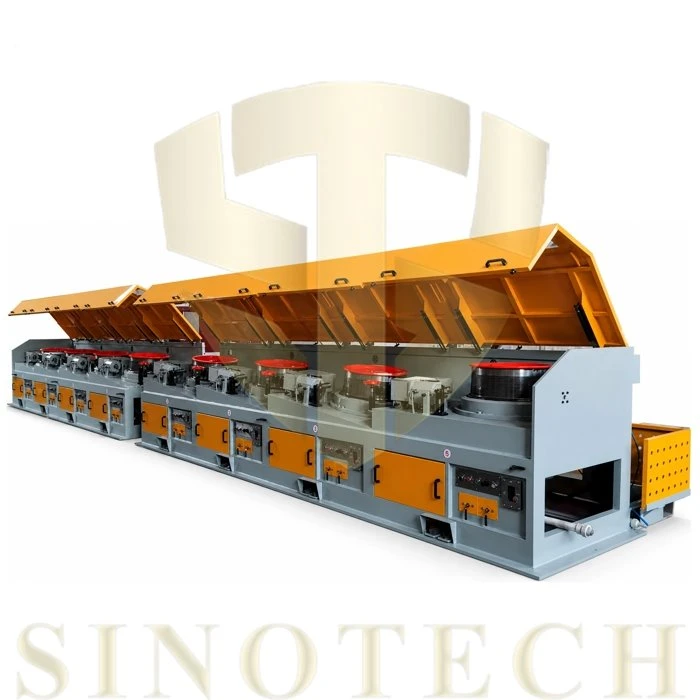
Rigid Structural Frames: Machine bases are fabricated from heavy-gauge structural steel plates, precision-annealed to relieve residual welding stresses, and subsequently machined on large-scale CNC boring mills to ensure permanent alignment under dynamic load.
Capstan Metallurgy & Thermal Management: Capstans are cast from wear-resistant alloy steel or nodular cast iron, with working surfaces plasma-sprayed with tungsten carbide or ceramic coatings (hardness exceeding HRC 60-65). Internal spiral cooling channels circulate pressurized water to dissipate frictional heat instantly.
Precision Drive Trains: Power transmission utilizes hardened, ground helical gears manufactured from alloy steels (such as 20CrMnTi) subjected to carburizing and quenching, achieving AGMA/ISO high-precision gear classes to minimize backlash, vibration, and mechanical noise.
Die Box Design: Cast steel or stainless steel die holders feature independent internal water cooling jackets and micro-adjustment alignment screws, maintaining precise coaxial alignment between the die aperture and the capstan axis to prevent eccentric wire wear.
Technical Specifications
The following baseline technical parameters represent standard industrial configurations across multi-block straight-line and heavy-duty wire drawing lines. Custom specifications are engineered based on specific input tensile strengths and final gauge requirements.
|
Technical Parameter |
Straight-Line Series (Typical) |
Inverted Vertical Series |
Wet Wire Drawing Series |
|
Inlet Wire Diameter |
Ø 5.5 mm – Ø 12.0 mm |
Ø 8.0 mm – Ø 22.0 mm |
Ø 1.2 mm – Ø 4.0 mm |
|
Finished Wire Diameter |
Ø 1.6 mm – Ø 5.0 mm |
Ø 2.5 mm – Ø 8.0 mm |
Ø 0.1 mm – Ø 1.2 mm |
|
Max. Drawing Speed |
Up to 12 m/s (720 m/min) |
Up to 3 m/s (180 m/min) |
Up to 25 m/s (1500 m/min) |
|
Number of Blocks |
5, 7, 9, 11, 13 blocks |
1 to 2 blocks |
Multi-die continuous |
|
Main Motor Power |
15 kW – 55 kW per block |
37 kW – 110 kW |
7.5 kW – 30 kW total |
|
Capstan Diameter |
400 mm – 800 mm |
600 mm – 1200 mm |
150 mm – 300 mm |
|
Lubrication Mode |
Dry soap powder (Ca/Na base) |
Dry soap or liquid spray |
Fully immersed emulsion |
|
Control Architecture |
PLC + AC Vector Inverter |
PLC + Frequency Converter |
PLC + PID Closed-Loop |
Applications
Industrial wire drawing machines feed vital upstream raw materials into diverse secondary manufacturing sectors:
Fastener Manufacturing: Producing cold-heading quality (CHQ) carbon steel wire for high-strength bolts, machine screws, rivets, and structural nuts.
Wire Mesh & Reinforcement: Drawing low-carbon wire for welded wire fabric, construction mesh, gabion boxes, and concrete reinforcement wire.
Nail & Hardware Production: Providing uniform gauge wire for high-speed automatic nail making machines and staple manufacturing lines.
Welding Consumables: Drawing copper-coated welding wire (MIG/TIG) and flux-cored wire requiring strict diameter control and surface cleanliness.
Spring & Cable Industry: Processing high-carbon spring steel wire and armored steel wire for automotive suspension, industrial springs, and mechanical cables.
Key Selection Factors
Procurement engineers must evaluate critical operational metrics before finalizing equipment specifications to ensure return on capital investment (ROCI):
Tensile Strength & Material Hardness: Match motor torque and reduction schedules to the exact carbon or alloy grade (e.g., SAE 1008 vs. SAE 10B38 or 304 stainless steel), accounting for work-hardening coefficients across passes.
Reduction Ratio Distribution: Verify that area reduction per pass (typically 15% to 25%) avoids excessive die pressure while maintaining sufficient grain refinement without causing central bursting or wire splitting.
Cooling Circuit Capacity: Ensure water flow rates and heat exchanger capacities can maintain thermal stability under continuous peak loads, preventing wire thermal cracking or lubricant breakdown.
Consumable Lifecycle Economics: Evaluate the hardness depth of tungsten carbide capstan coatings and die holder standardization to minimize downtime spent on routine component replacement.
Footprint & Foundation Requirements: Assess concrete pit depth, trench routing for cooling piping, and electrical substation load requirements for multi-inverter drive setups.
FAQ

Request a Quote
When submitting an RFQ for industrial wire drawing machines, engineering teams should provide the following baseline parameters to accelerate technical proposal generation and quotation accuracy:
Material Grade & Standard: (E.g., SAE 1008, 45#, 304 Stainless Steel)
Inlet Wire Diameter (mm):
Target Finished Wire Diameter (mm):
Inlet Wire Tensile Strength (MPa):
Required Production Speed (m/min):
Coil Weight Requirements (kg) – Inlet & Outlet:
Utility Constraints: (Available factory voltage, cooling water temperature/pressure)
With abundant experience, we are one of the most professional wire drawing machines manufacturers in China. Please feel free to buy customized wire drawing machines at competitive price from our factory. Welcome to contact us for quotation.
Dry Drawing Machine, Industrial Cartridge Dust Collector, Sanding Belt Wire Rust Removal Unit