


Industrial Nail Cutter Grinding Machines
Industrial nail cutter grinding machines are used to sharpen and recondition cutting tools installed in wire nail making machines. These tools cut wire to the required nail length and help form the nail point during production. Their cutting edges and profiles must match the requirements of the nail design and the forming process.
During continuous nail production, cutter edges are subjected to repeated mechanical loading and wear. Worn or incorrectly ground cutters can contribute to burrs, inconsistent cutting, dimensional variation, and interruptions for tool replacement. A dedicated grinding machine provides a controlled method for restoring cutting edges and maintaining the required tool geometry.

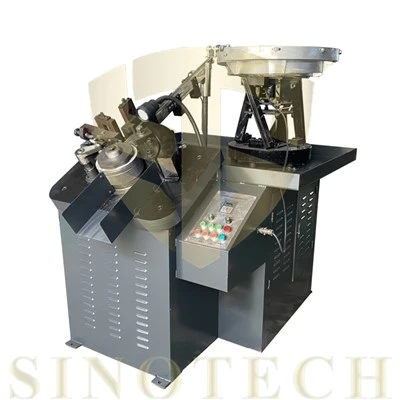
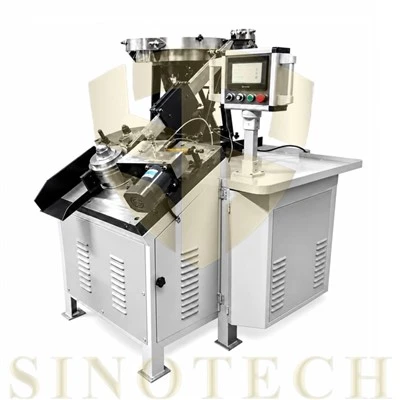
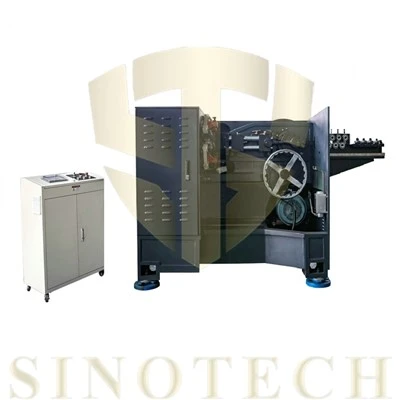
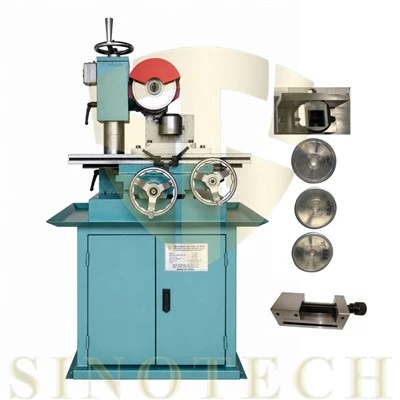
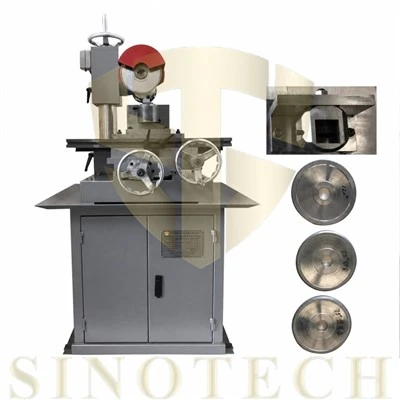
Machine Types
Precision Nail Cutter Grinding Machines
These machines are intended for routine sharpening and reconditioning of nail-making machine cutters. Depending on the configuration, they may use manual, mechanical, or controlled feed mechanisms to guide the cutter against the grinding wheel.
Profile Grinding Machines
Profile grinding machines are suitable for cutters with defined contours or shaped cutting edges. The grinding method and fixture must match the cutter geometry to maintain the required profile during reconditioning.
CNC Nail Cutter Grinding Machines
CNC configurations use programmed axis movements to control the grinding path. They may be appropriate for complex profiles, repeat production, or frequent changes between cutter designs. The number of controlled axes, programming functions, and available automation depend on the actual model.
Key Features
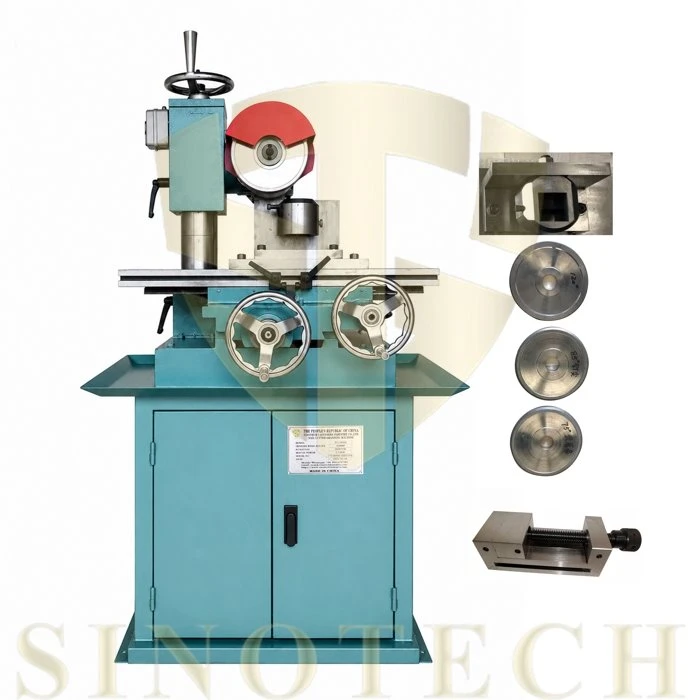
Controlled Grinding Feed: A controlled feed mechanism guides the workpiece or grinding wheel during material removal. Feed adjustment should correspond to the cutter material, wheel specification, and required finishing allowance.
Workpiece Clamping and Positioning: Dedicated fixtures help position cutters consistently during grinding. Fixture design should accommodate the cutter's length, thickness, clamping surfaces, and cutting-edge orientation.
Grinding Wheel Compatibility: Wheel selection depends on the cutter material, hardness, grinding allowance, and desired surface condition. The wheel's abrasive type, bond, dimensions, and permitted operating speed must comply with the machine manufacturer's specifications.
Profile Adjustment: For shaped cutters, the machine should provide the adjustment range or programmed movement required by the specified cutting profile. Actual profile accuracy must be established through workpiece measurement rather than inferred from the machine configuration alone.
Coolant and Grinding Debris Management: Where wet grinding is supported, the coolant system supplies fluid to the grinding zone and collects grinding debris. Dry-grinding configurations require suitable dust and debris management. The correct arrangement depends on the machine design and grinding process.
Technical Specifications
|
Parameter |
Reference Specification |
|
Machine type |
Industrial nail cutter grinding machine |
|
Grinding method |
Surface or profile grinding |
|
Workpiece type |
Cutting tools used in wire nail making machines |
|
Maximum workpiece length |
200 mm |
|
Maximum workpiece width |
100 mm |
|
Maximum workpiece thickness |
30 mm |
|
Grinding wheel diameter |
150 mm |
|
Grinding wheel bore |
31.75 mm |
|
Grinding wheel width |
20 mm |
|
Grinding wheel speed |
2,850 rpm |
|
Main motor power |
2.2 kW |
|
Workpiece feed |
Manual or powered feed |
|
Profile control |
Mechanical adjustment or CNC control |
|
Workpiece clamping |
Mechanical fixture |
|
Coolant system |
Wet or dry grinding configuration |
|
Power supply |
380 V, three-phase, 50 Hz |
|
Machine dimensions |
1,200 × 900 × 1,600 mm |
|
Machine weight |
800 kg |
Applications
Wire Nail Cutter Reconditioning: Used to restore cutting edges on compatible cutters from wire nail production equipment. The cutter drawing and existing edge condition determine the required grinding allowance and final geometry.
Profiled Cutting Tool Grinding: Suitable for shaped cutters when the machine's fixture and grinding path can reproduce the specified contour. Complex profiles may require dedicated fixtures or CNC-controlled movement.
Nail Production Tool Maintenance: For nail manufacturers maintaining replacement cutters in-house, grinding equipment can support scheduled tool maintenance and reduce reliance on external sharpening services, depending on the available machining capability.
Cutter Replacement and Toolroom Operations: Toolrooms can use compatible grinding equipment to prepare replacement cutters and recondition serviceable tools. Severely chipped, cracked, or dimensionally undersized cutters should be assessed before reuse.
Key Selection Factors
Cutter Dimensions and Geometry: Provide the maximum cutter length, width, thickness, cutting-edge angle, and profile drawing. These details determine the required work envelope, fixture arrangement, and grinding method.
Tool Material and Hardness: Identify the cutter material and heat-treatment condition. Abrasive selection and grinding parameters must suit the actual tool material to avoid excessive heat or undesirable surface damage.
Required Edge Quality: Specify the required cutting-edge geometry, dimensional tolerance, and surface finish where applicable. Do not select a machine solely on the basis of spindle speed or nominal positioning accuracy.
Production Volume: Manual or mechanically assisted machines may suit maintenance work and small batches. CNC control or automated handling may be appropriate for repeated production, provided the actual cycle time and loading arrangement meet the production target.
Maintenance and Operating Requirements: Evaluate grinding wheel availability, dressing requirements, coolant handling, access to replacement parts, and operator training. Confirm electrical requirements and installation conditions using the machine documentation.
Frequently Asked Questions

Request a Quote
To identify a suitable industrial nail cutter grinding machine, submit your cutter drawings and production requirements. Include workpiece dimensions, material and hardness, required edge geometry, target output, and any existing grinding process information.
The machine configuration should be recommended against these requirements, with confirmed specifications, compatible grinding wheels, fixture details, and installation conditions provided for technical review.
With abundant experience, we are one of the most professional nail cutter grinding machines manufacturers in China. Please feel free to buy customized nail cutter grinding machines at competitive price from our factory. Welcome to contact us for quotation.
Plastic Strip Nails Assembly Machine, Shoot NK Pin Assembling Machine, Shooting Nail Assembly Machine