


Industrial Nail Making Machines: Technical Selection & Production Guide
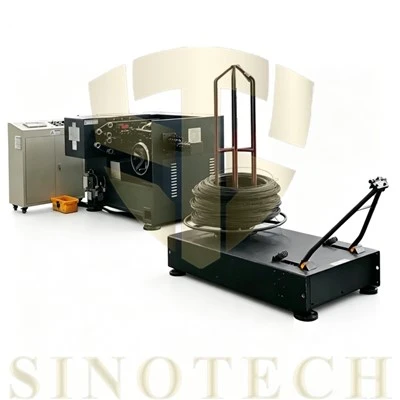
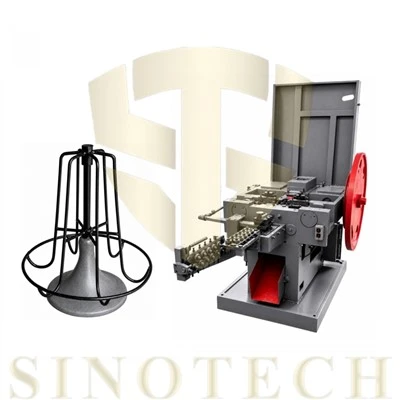
Industrial nail making machines form the core of wire processing and fastener manufacturing plants. These mechanical systems transform cold-drawn low-carbon steel wire into precision-formed wire nails, coil nails, and roofing fasteners in a continuous automated cycle. The production process relies on mechanical cold heading: wire is pulled from a payoff stand, straightened through horizontal and vertical roller arrays, fed into a precision gripping die, headed by a punch stroke, and sheared by cutting dies to form the chisel point.
Operating within a complete wire processing line, these machines integrate downstream with automatic nail polishers and electro-galvanizing tanks, or upstream with wire drawing machines. Plant operators evaluate these units based on continuous duty cycle reliability, dimensional consistency of the nail shank and head, and minimization of thermal wear during high-speed impact forging.


Machine Types
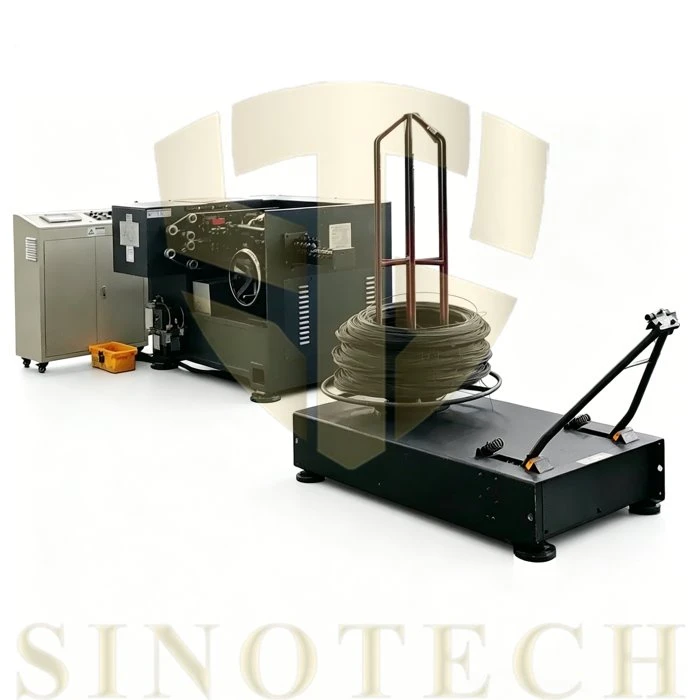
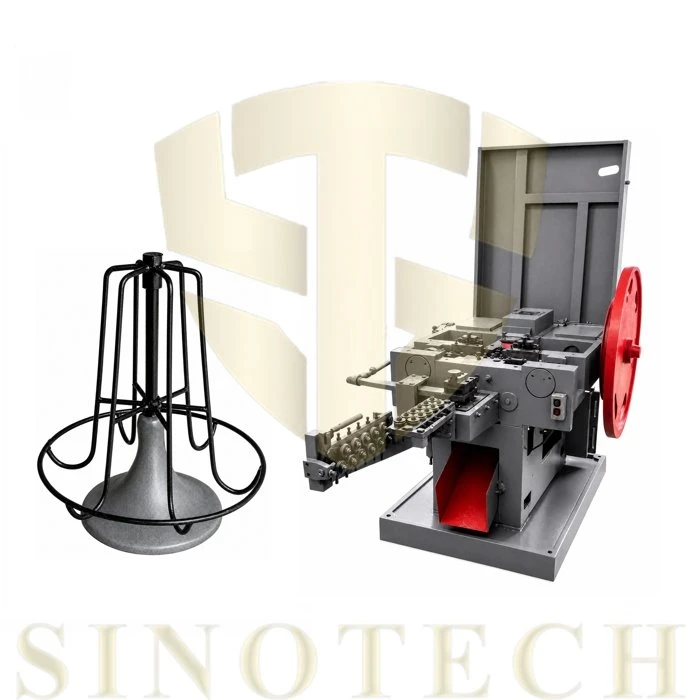
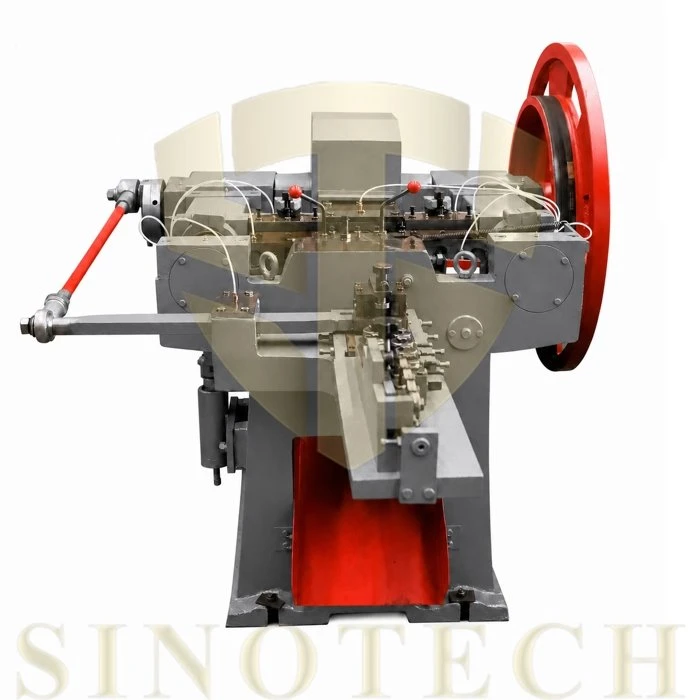

Selecting the correct machinery architecture depends directly on required output volume, shift duration, and labor allocation.
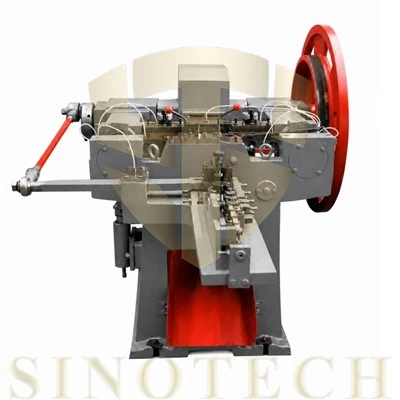
Traditional Rotary Nail Making Machines
Mechanism: Crank-driven plunger mechanism with mechanical cam-actuated wire feeding and gripping.
Speed Range: 200 to 400 nails per minute.
Characteristics: Offers mechanical simplicity, straightforward maintenance routines, and lower initial capital investment. Suited for low-to-medium volume batch production of various non-standard or specialty nail types.
High-Speed Rotary/Plunger Nail Making Machines
Mechanism: Fully enclosed dynamic balancing structure with forced oil lubrication and precise eccentric shaft drives.
Speed Range: 700 to 1,400 nails per minute.
Characteristics: Features reduced vibration at high impact frequencies, closed-loop lubrication circuits to prevent thermal expansion, and proximity sensor monitoring for wire feed jams. Suited for continuous, 24/7 mass production of standard common nails and pallet nails.
Coil Nail Making Machines (Collation Systems)
- Mechanism: Automated welding and wire-collating stations that assemble loose bulk nails onto dual copper-coated steel wires at a specific angle (typically 15-degree wire collated).
- Characteristics: Dedicated secondary equipment paired with nail rolling and thread-rolling attachments for pneumatic nailer applications.
Key Features
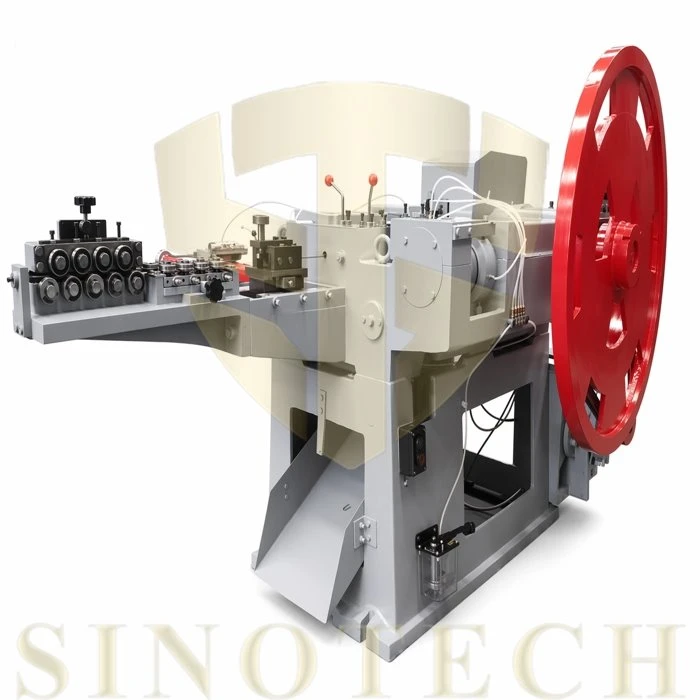
Rigid Cast Iron Machine Body: Heavy-duty nodular cast iron frames absorb cyclic impact forces and eliminate structural flexing during high-speed heading, maintaining alignment between punch and die.
Forced Circulation Lubrication System: Continuous oil pumps deliver filtered lubricant to all reciprocating slides, bearings, and cam surfaces, preventing seizure and reducing thermal degradation of sliding contacts.
Precision Roller Feeding Mechanism: One-way clutch or cam-driven roller feeding units control wire feed length with a tolerance of under ±0.1 mm, ensuring uniform shank length before shearing.
Carbide-Tipped Cutting and Heading Tooling: High-speed steel (HSS) and tungsten carbide inserts resist abrasive wear during wire shearing and repeated impact forging, extending operational intervals between tool replacements.
Sensor-Driven Stop Logic: Integrated optical and mechanical sensors detect wire breakage, feed slip, or jammed blanks, instantly triggering emergency motor braking to prevent die destruction.
Technical Specifications
The following parameters outline standard industrial nail making machine configurations. Customization is available for specific wire gauges and shank patterns.
|
Model Series |
Applicable Wire Diameter (mm) |
Nail Length Range (mm) |
Output Capacity (Nails/min) |
Main Motor Power (kW) |
Net Weight (kg) |
Dimensions (L×W×H, mm) |
|
Z94-2.5C |
Φ1.8 – Φ2.5 |
25 – 50 |
700 – 900 |
3.0 |
1,400 |
1,550 × 1,200 × 1,150 |
|
Z94-3C |
Φ2.2 – Φ3.4 |
40 – 85 |
600 – 800 |
4.0 |
1,850 |
1,750 × 1,300 × 1,250 |
|
Z94-4C |
Φ3.0 – Φ4.5 |
65 – 100 |
500 – 700 |
5.5 |
2,400 |
1,950 × 1,400 × 1,350 |
|
HSN-40 |
Φ2.0 – Φ4.0 |
32 – 90 |
1,000 – 1,400 |
7.5 |
3,100 |
2,100 × 1,500 × 1,400 |
|
HSN-50 |
Φ3.5 – Φ6.0 |
90 – 150 |
700 – 900 |
11.0 |
4,500 |
2,600 × 1,800 × 1,600 |
Applications
Construction & Framing
Large-scale manufacturing of common round iron nails (2.5mm to 6.0mm wire diameter) utilized in timber framing, concrete formwork, and general structural assembly.
Pallet & Packaging Industry
Production of smooth, ring-shank, and screw-shank coil nails designed for high-frequency pneumatic nail guns used in wooden pallet and crate construction.
Roofing & Specialty Fasteners
Fabrication of umbrella nails, clinch nails, and concrete masonry nails requiring specialized point geometry and surface coatings.
Key Selection Factors
Evaluating capital equipment for a manufacturing plant requires analyzing several operational and technical criteria:
Raw Material Compatibility: Verify that the machine's wire feeding and gripping jaws accommodate the tensile strength and diameter tolerance of available cold-drawn wire (typically SAE 1008 or Q195 low-carbon steel wire).
Target Output vs. Shift Requirements: Calculate daily tonnage goals. High-speed units reduce labor cost per unit but require strict adherence to preventive maintenance schedules to prevent unscheduled line stoppages.
Tooling Interchangeability: Assess the setup time required to change gripper dies, cutter knives, and punch pins when switching between different nail lengths and diameters.
Facility Utilities: Confirm factory electrical supply (e.g., 380V/50Hz/3Ph or 440V/60Hz/3Ph) matches motor requirements and that adequate floor space is allocated for wire payoff stands and finished bin collection.
Maintenance Accessibility: Ensure lubrication points, adjustment linkages, and electrical control panels are easily accessible for routine operator inspection.
Technical FAQ

Request a Quote
To receive a precise technical proposal and commercial quotation tailored to your production requirements, please provide the following details in your inquiry:
Target Nail Specifications: Wire diameter range and length range (e.g., 2.5mm x 50mm).
Expected Daily Output: Required tonnage or total pieces per 8-hour shift.
Raw Material Type: Available wire grade and tensile strength.
Electrical Specifications: Local voltage, frequency, and phase requirements.
Destination Port: For freight and logistics calculation.
With abundant experience, we are one of the most professional nail making machines manufacturers in China. Please feel free to buy customized nail making machines at competitive price from our factory. Welcome to contact us for quotation.
Aluminium Rivet Nail Making Machine, Double Head Nail Making Machine, Paper Tape Nail Collating Machine