


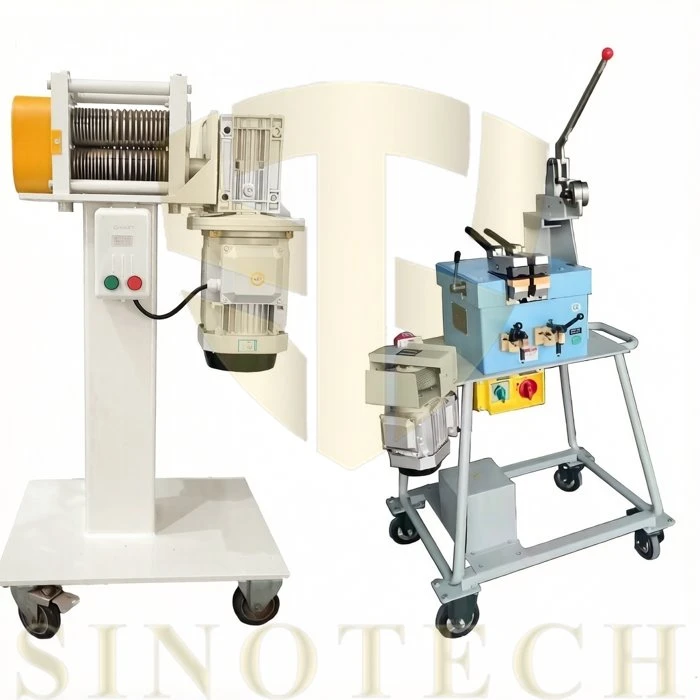
Fine Wire Drawing Machine
The Fine Wire Drawing Machine reduces metal wire to smaller diameters through multiple drawing dies arranged in sequence.
Description
Fine Wire Drawing Machine
Product Overview
The Fine Wire Drawing Machine reduces metal wire to smaller diameters through multiple drawing dies arranged in sequence. It is designed for processing fine copper, brass, aluminum alloy, stainless steel, and other compatible metal wires used in electrical conductors, precision components, and industrial wire products.
During drawing, the wire passes through progressively smaller dies while the capstan drive controls wire movement and the take-up unit collects the finished wire. Die selection, reduction per pass, lubrication, cooling, and tension control all affect the achievable wire diameter and surface condition.
For production lines requiring additional control of wire ductility, an inline resistance annealing unit can be integrated into the equipment configuration. The drawing machine can be configured according to the incoming wire diameter, target finished diameter, material, production speed, and spool requirements.
Key Features
Multi-Die Drawing System
Multiple drawing dies reduce wire diameter in successive passes. The die sequence is selected according to the incoming material, initial diameter, target diameter, and reduction schedule. Tungsten carbide dies or polycrystalline diamond (PCD) dies can be selected for compatible wire materials and production requirements.
Servo-Controlled Capstan Drive
An AC servo-driven capstan system coordinates wire movement through the drawing stages. Drive settings can be adjusted to suit the production process, while the capstan surface and contact conditions should be matched to the wire material and operating requirements.
Take-Up Tension Control
The take-up system collects finished wire while maintaining tension appropriate for the selected wire diameter and material. A dancer mechanism and feedback control can be used to coordinate take-up speed with the drawing line, helping manage tension changes during acceleration, deceleration, and spool winding.
Optional Inline Resistance Annealing
An inline resistance annealer can be incorporated when the production process requires heat treatment between drawing and winding. Annealing parameters depend on the material, wire diameter, line speed, and required mechanical properties. Protective gas can be specified when required by the material and surface-quality requirements.
Lubrication and Cooling System
The lubrication and cooling arrangement supports heat removal and friction management during wire drawing. Cooling capacity, lubricant type, filtration, and temperature control should be matched to the wire material, die arrangement, and production speed.
Technical Specifications
|
Specification |
Available Range or Configuration |
|
Compatible materials |
ETP copper, OFC copper, brass, aluminum alloys, stainless steel 304/316, nickel alloys |
|
Inlet wire diameter |
0.8–2.0 mm |
|
Finished wire diameter |
0.05–0.5 mm |
|
Maximum drawing speed |
Up to 2,500 m/min |
|
Number of drawing dies |
16–32 |
|
Main drive power |
7.5–30 kW |
|
Annealing unit capacity |
15–50 kVA |
|
Drawing die materials |
Tungsten carbide or PCD |
|
Main drive |
AC servo or inverter-driven configuration |
|
Take-up spool options |
DIN 125, DIN 160, DIN 200, or compatible custom spools |
|
Tension control |
Automatic take-up torque regulation; dancer feedback where equipped |
|
Annealing method |
Inline electrical resistance heating, when specified |
|
Cooling arrangement |
Drawing die and capstan lubrication/cooling circuits |
|
Control configuration |
Drawing speed, drive coordination, and take-up control according to the selected system |
Applications
Fine Copper and Electrical Conductor Wire
The machine can be used to draw copper wire for downstream conductor manufacturing, including fine wire used in electrical connections and flexible conductor products. Material grade, finished diameter, surface condition, and subsequent annealing requirements should be defined before equipment selection.
Precision Metal Wire Components
Fine wire is used as feedstock for small pins, fasteners, and other precision metal components. The drawing process must be matched to the required wire diameter, dimensional tolerance, mechanical properties, and downstream forming process. Final tolerance capability should be confirmed through production and measurement data.
Stainless Steel Filter and Mesh Wire
Compatible stainless steel wire can be drawn for subsequent weaving or fabrication of industrial filter media, screening products, and fine wire mesh. The selected die materials, lubrication system, and reduction schedule should account for the stainless steel grade and target wire diameter. The drawing machine produces wire feedstock rather than finished woven mesh.
Key Selection Factors
When requesting a Fine Wire Drawing Machine, buyers should provide the following information:
Material and Inlet Diameter: Specify the metal grade and incoming wire diameter. Different materials may require different dies, lubrication, and drawing schedules.
Finished Diameter: State the required final diameter and dimensional tolerance. These requirements determine the die sequence and the number of drawing passes.
Production Speed: Provide the target operating speed and expected production volume. The achievable speed depends on material, diameter reduction, lubrication, cooling, and take-up conditions.
Annealing Requirements: Indicate whether inline annealing is required and provide the target mechanical properties or downstream processing requirements.
Spool and Line Integration: Specify spool dimensions, winding requirements, available installation space, and compatibility with upstream or downstream equipment.
FAQ
Q: Can the machine process different metal materials?
A: It can be configured for compatible non-ferrous metals and stainless steel. The die selection, lubrication, reduction schedule, and operating parameters must match the selected material.
Q: Is inline annealing included?
A: An inline resistance annealer is an available configuration. Confirm whether it is included in the required machine package and specify the material and heat-treatment requirements.
Q: What determines the achievable finished wire diameter?
A: The incoming diameter, material properties, die sequence, reduction per pass, and drawing conditions determine the achievable diameter. The required tolerance should be confirmed against actual production capability.
Q: What information is needed for a quotation?
A: Provide the material grade, inlet diameter, target finished diameter, required speed, annealing requirements, spool dimensions, and expected production volume.
Request a Quote
Send your wire material, inlet and finished diameters, target production speed, annealing requirements, and spool specifications to request a machine configuration and technical quotation.
Hot Tags: fine wire drawing machine, China fine wire drawing machine manufacturers, factory, Cartridge Filter Wire Scale Collector, Industrial Cartridge Dust Collector, Traditional OTO Wire Drawing Machines, Water Tank Fine Wire Drawing Machine, Wire Grinding Descaler, wire processing line
Send Inquiry
You Might Also Like


